What an air conditioning service actually does for your system
Air conditioning gets on with its job in the background, so it's easy to forget about until something goes wrong. In the meantime dust builds up on the filters and coils, sludge collects in the drip tray, and small electrical or mechanical issues creep in unnoticed. Each of these makes the system work harder for the same result. Left long enough, some of them turn into leaks, smells or breakdowns.
A service sorts all of that out in one visit. Teesside Air Conditioning services wall-mounted, multi-split, cassette and ducted systems in homes and workplaces across the area, whoever installed them. We look after everything from bedroom units in Coulby Newham to shop and office systems in Stockton and Billingham.
Got several units, need visits on a fixed schedule or keep records for compliance? Our planned air conditioning maintenance may suit you better. For most homeowners and smaller businesses, a well-timed service once a year is all the system needs.
- Typical frequency
- Usually once a year for homes
- Busy commercial sites
- Often every six months
- Typical visit
- Around an hour for a single wall unit
- After the visit
- Written record of checks and findings
Our air conditioning service, step by step
What's involved depends on the type and size of your system. On a typical split system we work in the same order every time: indoor unit, drainage, outdoor unit, electrics, and finally performance testing once everything is back together.
Indoor unit: filters, coil and fan
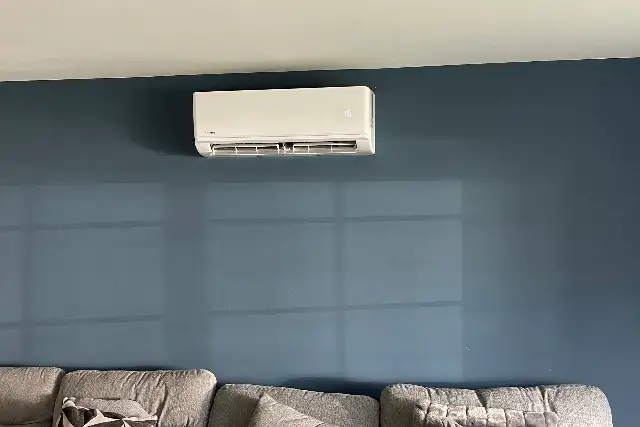
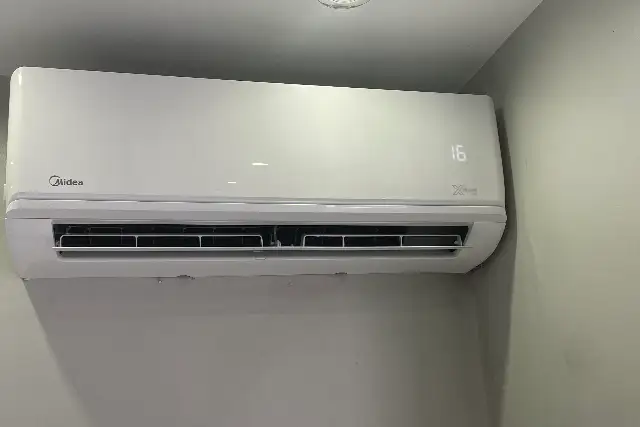
We take out and clean the filters, then inspect the indoor coil and the fan barrel. That's where dust and mould tend to build up out of sight. The coil gets cleaned with a suitable coil cleaner, and we clean the fan where we can reach it. Airflow improves and the unit can shift heat and moisture properly again.
Condensate tray, drain and pump
We clean the drip tray and flush the drain line so water runs freely to its outlet. If there's a condensate pump, we check it switches on and clears the water as it should. Few jobs do more to prevent the leaks that stain walls and ceilings.
Outdoor unit, electrics and controls
Outdoor coil and fan
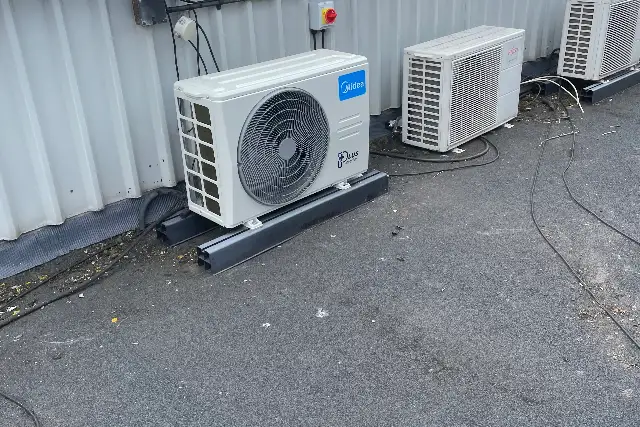
We clear out leaves and debris, clean the coil fins and check the fan for damage or wear.
Fixings and pipework
Brackets, stands, anti-vibration mounts and pipe insulation are checked for corrosion, movement or wear.
Electrical checks
We look over visible connections, the isolator and cabling for signs of overheating, damage or looseness.
Controls
We test the remote or wall controller, timers and modes to make sure the unit responds correctly.
Performance readings and antibacterial treatment
With the system back together, we run it in cooling and, where it has one, heating mode. We take readings such as air-on and air-off temperatures and current draw, and check refrigerant performance where appropriate. An antibacterial treatment goes on the indoor coil to help keep musty smells down. Then we write up what we found, along with any recommendations.
What a regular service gives you
Lower running costs
With clean filters and coils, the system doesn't have to work as hard to keep the room comfortable.
Fresher-smelling air
Cleaning and treating the coil, fan and drip tray deals with the build-up behind musty smells.
Fewer water leaks
A flushed drain and a clean tray are the best defence against drips down the wall.
Problems caught early
Worn parts, loose connections and corrosion can be picked up before they lead to a breakdown.
Warranty paperwork in order
A written record of each service helps when the manufacturer's terms ask for proof of servicing.
A longer working life
A clean, well-checked system is under less strain, so it tends to last longer.
Domestic and commercial servicing: what's different?
At home it's usually one or two wall-mounted units used for part of the year. The focus is on cleanliness, drainage, efficiency and getting the system ready for the season ahead. Commercial systems tend to run longer hours and may include ceiling cassettes, ducted units and bigger outdoor units. Servicing them can mean access equipment, more filter and coil cleaning, and fitting visits around opening hours.
Kitchens, salons, gyms and workshops throw out grease, fibres or dust that clog filters and coils faster, so they usually need attention more often. For businesses with larger systems we can also explain where legal leak-check duties might apply. Our commercial air conditioning page has more on workplace systems.
How often should air conditioning be serviced?
Once a year is a sensible baseline for most homes, and many manufacturers recommend at least an annual service. Systems that run long hours, serve busy commercial premises or sit somewhere dusty often benefit from a visit every six months. Always start with your manufacturer's guidance.
Does the time of year matter?
Spring is popular because the system is then clean and ready before the warm weather. People who mainly use their unit for heating sometimes prefer early autumn. Near the coast in Redcar and Hartlepool, outdoor units can pick up salt deposits, so regular checks are especially worth having there.
Filter cleaning between services
You can usually clean the indoor filters yourself every few weeks when the unit's in heavy use. Switch it off, lift the front cover, take the filters out and gently vacuum or rinse them. Let them dry fully before you put them back. It keeps the airflow up between visits, but it's no substitute for a full service.
What affects the price of an air conditioning service?
Systems vary a lot in type, size, condition and access, so Teesside Air Conditioning doesn't publish one fixed price. Tell us what you've got when you book and we'll confirm the cost for your system before the visit.
Regular servicing can help keep running costs down, too. Clean filters and coils let the system move heat with less effort, so it uses less electricity to reach and hold the temperature you've set. If you need more than a service, our full range of air conditioning services covers repairs, maintenance and new installations.
Number of indoor units
Every indoor unit needs its own filter, coil, drain and performance checks, so more units means more time.
Type of system
Ceiling cassettes and ducted units usually take longer to service than standard wall-mounted units.
Condition of the system
A unit that's gone several years without a service will usually need more cleaning.
Access to the units
High-level outdoor units, roof positions or cramped ceiling voids may need extra equipment.
Additional work found
Any parts, refrigerant work or repairs we find are quoted separately before anything goes ahead.
Signs your air conditioning is due a service
Some systems make it fairly obvious they need attention. We service units in homes and businesses across Teesside and the surrounding areas, and these are the warning signs we see most often. If any of them sound familiar, book a service sooner rather than later:
- A musty or damp smell when the unit starts up
- Weaker airflow, or rooms taking longer to reach temperature
- Water marks or drips below the indoor unit
- Visible dust or dark spots on the vanes or fan
- An outdoor unit clogged with leaves, cobwebs or debris
- No service for more than a year, or none at all since it was installed
Servicing and your manufacturer warranty
Manufacturer warranties often ask for evidence of regular servicing, and the terms vary from brand to brand and model to model. Some want an annual service by a suitably qualified engineer. Others set different conditions. Check your warranty documents or ask the manufacturer so you know what applies to your system.
After each service you get a written record to keep with your warranty paperwork. If we find a fault, we'll explain it clearly and can quote for air conditioning repairs. Nothing gets done without your say-so.