A comfortable office is a more productive office
Most of us have worked somewhere that was too hot by mid-afternoon or freezing first thing on a Monday. Offices pick up heat from people, computers, screens, printers and lighting, and big windows add more on sunny days. You end up with drowsy afternoons, windows open to the traffic noise and arguments over the thermostat.
Teesside Air Conditioning designs office systems that fix those problems properly. We look at how the space is divided, which rooms catch the sun, and how many people use each area and when. We also check what the ceiling, the lease and the building will allow. From there we recommend equipment and zoning that gives sensible control without overcomplicating things.
We install in offices of every size, from a two-person suite above a shop to open-plan floors on business parks. Every project starts with a free survey and an honest, no-obligation written quote.
- Common units
- Ceiling cassettes, ducted and wall units
- Zoning
- Separate control for meeting rooms
- Scheduling
- Evening or weekend work by arrangement
- Survey and quote
- Free, with a written quotation
Zoning open-plan areas and meeting rooms
One thermostat rarely suits a whole office. A meeting room with eight people and a big screen heats up fast while the open-plan area stays comfortable. Meanwhile a north-facing corner might need warming at the same moment a south-facing one needs cooling.
Why meeting rooms need their own control
Meeting rooms go from empty to full in minutes. With their own indoor unit and controller, they can be cooled quickly for a meeting and turned down afterwards without affecting anyone else.
Occupancy
Each person gives off heat, so a small, full room needs more capacity per square metre than open-plan space.
Equipment
Displays, projectors and video-call kit add yet more heat to an enclosed room.
Controls
Simple local controllers with sensible limits let people adjust things without wasting energy.
Open-plan floors and perimeter zones
Bigger open-plan areas are usually split into zones, often by orientation, with several indoor units working together. Central controllers can set schedules and temperature limits across the office, so nothing gets left running overnight.
What good office cooling does for your team
Sharper afternoons
A steady, comfortable temperature helps people stay focused through the warmest part of the day.
Usable meeting rooms
Separate control keeps busy rooms comfortable without over-cooling the rest of the office.
Heating in winter
Reverse-cycle systems give efficient heat too, which helps on cold mornings and in perimeter zones.
Discreet equipment
Cassettes and ducted units keep walls clear and blend into suspended ceilings.
Sensible controls
Schedules and temperature limits stop systems running overnight or being set too low.
Fewer windows open
With less need to open windows on hot days, you get less traffic noise and dust. Ventilation still matters, though.
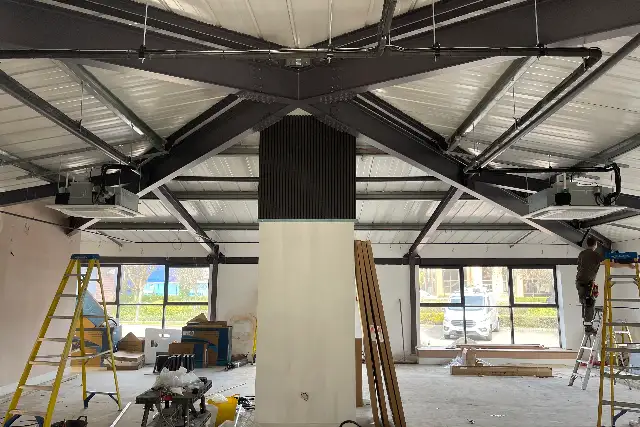
Ceiling cassettes, ducted units and suspended ceilings
A lot of Teesside offices have suspended grid ceilings, which suit ceiling-mounted equipment well. Where there's no ceiling void, wall-mounted or under-ceiling units still do a good job.
Ceiling cassettes
A cassette takes the place of a standard ceiling tile and spreads air in several directions, giving even coverage across open-plan areas. Pipework, power and the condensate drain all run in the void above. The condensate often needs a small pump to reach a drain point, and we plan for that at survey.
Ducted systems
Ducted units sit out of sight in the ceiling void with only the grilles showing, which suits reception areas, boardrooms and premium spaces. They need a deeper void and more installation work, but the finish is very clean.
Can units be fitted without a suspended ceiling?
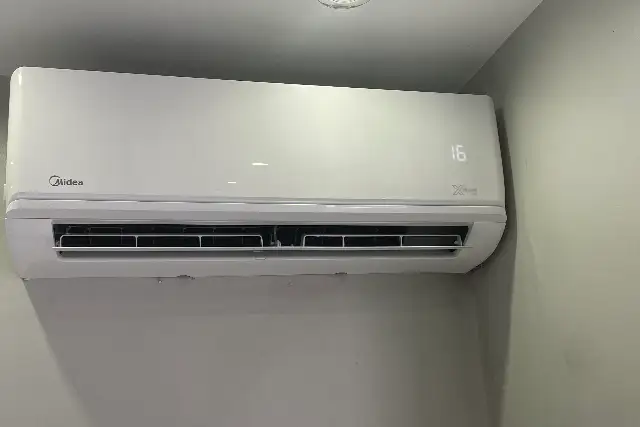
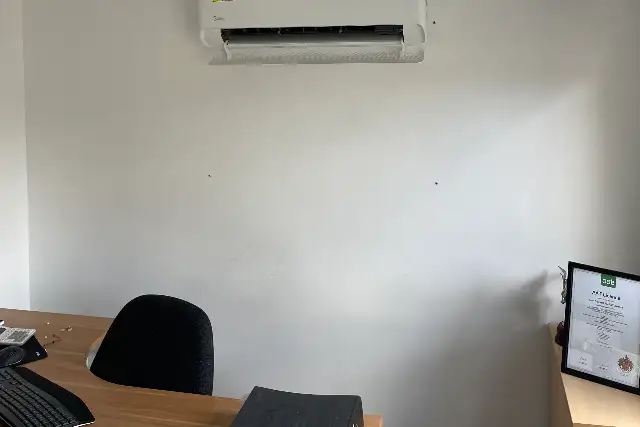
Yes. Wall-mounted units work well in smaller offices and converted buildings, such as older premises in Stockton or Darlington town centres, where solid ceilings or period features rule out cassettes. If the pipework can't be hidden, we run it in neat trunking.
Air conditioning is not the same as fresh air
People mix these up all the time. Standard split and cassette systems recirculate the air already in the room. They cool or heat it, filter it and take out some moisture, but they don't bring in fresh air from outside. An office still needs proper ventilation to deal with carbon dioxide and stale air, whether that's opening windows, trickle vents or a mechanical ventilation system.
Some offices already have mechanical ventilation, sometimes with heat recovery, and air conditioning works alongside it. If your office feels stuffy even when the temperature is fine, poor ventilation could be the cause. We'll tell you that straight rather than sell you cooling you don't need.
Factors that influence office air conditioning costs
Office projects range from one wall unit to a multi-zone system across several floors, so we don't quote prices without seeing the space. Layout, ceilings, the number of zones and access all make a difference, and so does any other work you're planning from our full range of air conditioning services.
After a free survey we send a written quote covering equipment, zoning and any assumptions about access or out-of-hours working, so you and your landlord can review it easily.
Floor area and zones
More rooms and zones mean more indoor units, controllers and pipework.
Equipment type
Wall units are usually the simplest. Cassettes need a ceiling void, and ducted systems involve the most installation work.
Building access
Upper floors, roof-mounted outdoor units and long pipe routes through risers add time and may need access equipment.
Working hours
Evening or weekend installation to avoid disrupting staff can be arranged, and it's reflected in the programme.
Running costs
Office hours, set points, central scheduling and equipment efficiency (SEER and SCOP) all affect energy use.
Leases, landlords and service charges
Most offices are leased, so check the paperwork before you commit to an installation. It's something we talk through with tenants on offices across Teesside and the surrounding areas, because lease terms vary a lot from one building to the next.
Do I need my landlord's consent?
Usually, yes. Drilling external walls, fixing outdoor units and altering ceilings normally count as alterations that need written consent. The landlord or managing agent may say where outdoor units can go, what equipment is acceptable and who has to do the work. Planning permission or listed building consent can also apply in some locations.
Who maintains it and who pays?
In multi-let buildings, air conditioning may be a landlord service paid for through the service charge, or each tenant may own and look after their own system. Check your lease for maintenance, repair and reinstatement obligations at the end of the term. Keep your servicing records too, as they're often asked for at lease end. Teesside Air Conditioning can supply the paperwork you'd need for that.
Keeping noise down where people need to concentrate
In quiet offices and meeting rooms, unit noise matters. Manufacturers publish sound pressure levels in dB(A), and units are usually quietest on the lower fan speeds. A correctly sized unit spends most of its time at a moderate speed, which is quieter than an undersized one working flat out.
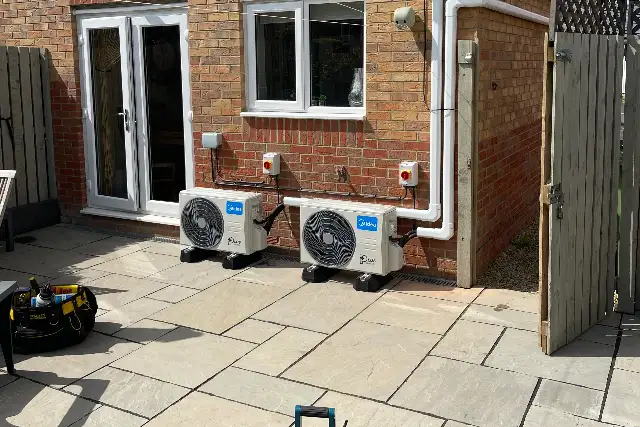
We also think about where the outdoor units go, keeping them away from meeting room windows and neighbouring offices, and we fit anti-vibration mounts. For video-call rooms, a ducted unit with well-placed grilles can be far less intrusive than a cassette right above the table.
- Choose units with low published dB(A) for meeting rooms
- Avoid airflow directly onto desks and seating
- Site outdoor units away from windows and shared walls
- Keep filters clean, as clogged filters make the fan louder