Why a warm bedroom ruins a good night’s sleep
Most people sleep best in a cool room. As we drop off, our core body temperature naturally falls, and a bedroom that stays warm into the night gets in the way of that. The result is restless sleep and waking too early. Sleep guidance commonly suggests a bedroom of roughly 16 to 19°C, though everyone has their own preference.
On warm evenings in the North East, bedrooms often hang on to the day's heat long after sunset. Top-floor rooms and loft conversions are the worst for it. Opening the window only helps if the air outside is cooler, and it lets in noise, light and insects. A properly installed air conditioning unit brings the room down to the temperature you pick and keeps it there, quietly.
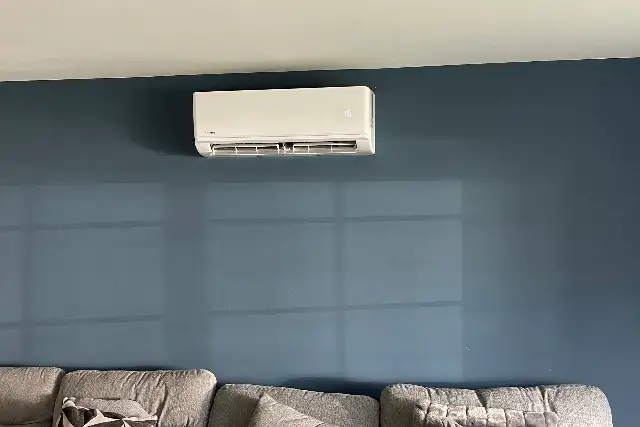
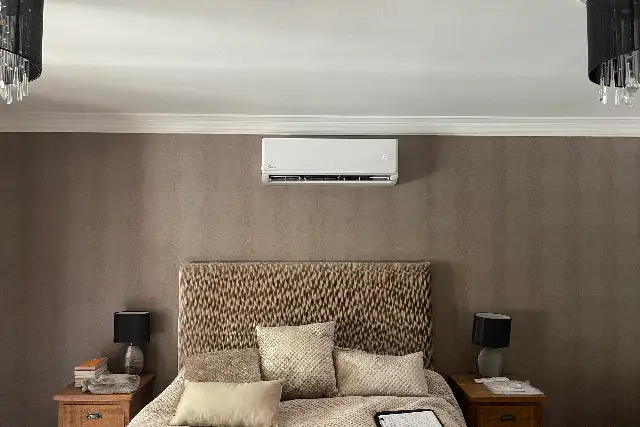
Teesside Air Conditioning installs bedroom systems with sleep in mind. That means low-noise indoor units, careful positioning away from the bed and controls that are easy to use in the dark. Every installation starts with a free survey and a no-obligation written quote.
- Sleep temperature
- Often around 16 to 19°C, by preference
- Indoor unit noise
- Check published dB(A) on quiet mode
- Typical install
- Usually completed within a day
- Also heats
- Reverse-cycle units warm in winter
Low-noise indoor units and night modes
Noise is the first thing most people ask about, and fair enough. Manufacturers publish the sound pressure level of each indoor unit in dB(A), usually for every fan speed. For a bedroom, the figure that counts is the lowest one, on the quiet or night setting. The quietest wall units on sale now are designed to be barely noticeable once you've settled down.
What does sleep or night mode do?
It varies by manufacturer. In general, sleep modes make small, gradual changes overnight so the system ticks over gently instead of cycling hard.
Gradual temperature shift
The set point drifts up a little in cooling (or down in heating) over a few hours, which saves energy and stops the room getting too cold.
Quiet fan
The indoor fan stays at its lowest speed to keep sound down.
Dimmed display
Many units let you dim or switch off the indicator lights so the room stays dark.
Timers
On and off timers let the room cool before bedtime and switch off in the early hours.
Inverter units run more smoothly
Modern inverter-driven systems change their compressor speed instead of switching fully on and off. Once the room is at temperature they tick over quietly, so you don't get the stop-start noise of older or cheaper equipment.
What bedroom air conditioning changes for you
Better sleep on warm nights
The room stays at the temperature you choose, not whatever the day left behind.
Windows can stay shut
Less street noise, light and insects get in while you cool the room.
Quiet operation
Low dB(A) indoor units and night modes are designed for rooms where people sleep.
Comfortable airflow
Careful positioning and louvre settings keep the air off the bed.
Warmth in winter
Reverse-cycle units heat cold bedrooms quickly and efficiently.
Less humidity
Cooling takes moisture out of the air, so sticky summer nights are easier to bear.
Positioning to avoid draughts over the bed
However quiet a unit is, cold air blowing straight over your pillow isn't comfortable. We plan where the indoor unit goes around the bed, the door and the window, so the air mixes into the room rather than landing on you.
- Mount on a wall that doesn't face the head of the bed where possible
- Use adjustable louvres to direct air along the ceiling
- Consider units with wide or indirect airflow settings
- Keep the outdoor unit away from your own and neighbours’ bedroom windows
Loft conversions and top-floor bedrooms
Rooms right under the roof are the most common bedroom enquiry we get. Heat builds up in the roof space during the day, dormer and roof windows let in strong sun, and warm air from the rest of the house rises. Even a well-insulated loft conversion in a modern home in Ingleby Barwick or Coulby Newham can be uncomfortable on a summer night.
Can a sloped-ceiling room have air conditioning?
Usually, yes. A wall-mounted unit needs a section of vertical wall, and a gable or dwarf wall often does the job. Floor-standing consoles suit rooms where wall space is tight. We also plan the route for the pipework and condensate drain, which might go through the eaves or down the outside of the building.
Older houses and coastal homes
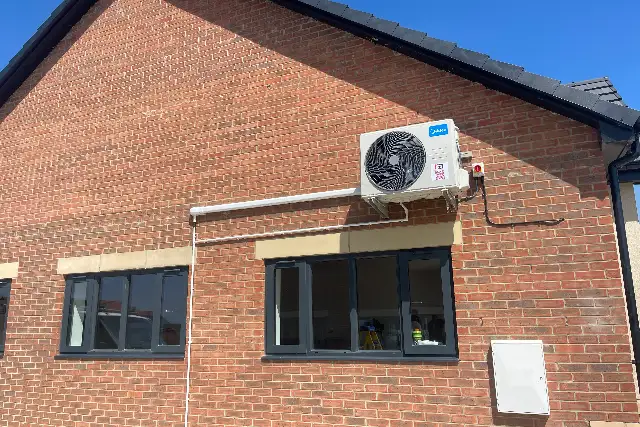
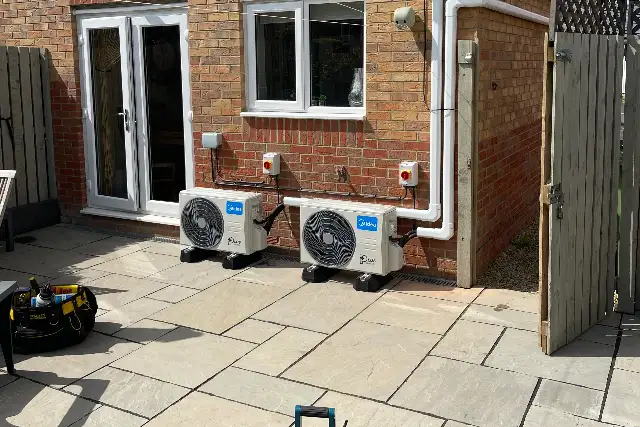
Attic bedrooms in Victorian houses in Middlesbrough or Saltburn can have thick walls and awkward pipe routes. We see plenty of both on jobs across Teesside and the surrounding areas. Near the coast, salt air and wind exposure also affect where we put the outdoor unit, which might go on a wall bracket, a ground stand or a flat roof.
What affects the price of bedroom air conditioning?
We don't list prices, because every bedroom installation is different. The size of the room, where the outdoor unit can go and how many rooms you want cooled all affect the cost. At Teesside Air Conditioning we'd rather price the job properly after seeing it.
After a free survey you'll get a clear written quote. If you're thinking about more than one bedroom, we'll compare separate systems with a multi-split so you can see which suits your home.
Room size and exposure
A sunny loft room needs more capacity than a small north-facing bedroom of the same size.
Unit specification
Quieter, more efficient models with extras like Wi-Fi control can cost more to buy.
Pipe route and access
Upstairs rooms, long routes through the house and work at height add installation time.
Number of bedrooms
Several rooms can be done with individual splits or one outdoor unit serving multiple indoor units.
Overnight running costs
These depend on your tariff, your insulation, the temperature you choose and how long the unit runs each night.
Children’s bedrooms and nurseries
Children can find it hard to settle in a hot room, and parents often worry about overheating. Air conditioning can keep a nursery or child's bedroom at a steady temperature, but there are a few practical points to think about first. If you'd like to talk them through, get in touch and we'll answer any questions before you book a survey.
Keeping controls safe and sensible
You can keep the handheld remote out of reach, and many systems offer Wi-Fi app control so you can adjust the room from downstairs without going in and waking a sleeping child. Some controllers also have child locks or temperature limits, which are handy for older children who like pressing buttons.
Placement and temperature
Indoor units are mounted high on the wall, out of reach. Keep cots and beds out of the direct airflow, and follow current safer-sleep guidance from health professionals on room temperature for babies.
Why portable air conditioners fall short in bedrooms
Portable units are tempting because they're cheap and need no installation. In a bedroom, though, they're a poor fit. The compressor sits in the room with you, so they're a lot louder than the indoor half of a split system. They also need an exhaust hose pushed out of a partly open window, which lets warm air, noise and insects straight back in.
Single-hose portables create slight negative pressure as they push air out, which pulls warm air in from the rest of the house. So they often struggle to cool the room and use a lot of electricity trying. A fixed split system puts the noisy compressor outside and is usually much more efficient.