Turning a seasonal room into an all-year living space
Conservatories and garden rooms are some of the hardest spaces in a house to keep comfortable. Big areas of glazing and lightweight roofs react quickly to the weather, so the room can go from stifling to chilly in a single day. We hear the same story from homeowners in Stockton-on-Tees, Middlesbrough and Yarm: they paid good money for the room and it ends up as storage for half the year.
A modern split air conditioning system deals with both problems. In summer it takes heat and moisture out of the air. In winter it runs in reverse as an air-to-air heat pump, pulling warmth from outside into the room. One system can replace the collection of fans, portable coolers and plug-in heaters that many conservatories end up relying on.
Glazed rooms do need more thought than a bedroom or lounge. Orientation, roof type, how much solid wall you have and the route out to the outdoor unit all affect what will work. Teesside Air Conditioning starts with a free survey, talks you through the options in plain terms and recommends a system sized for your room, not an off-the-shelf box.
- Typical installation
- Usually completed in one day
- Modes
- Cooling, heating and dehumidifying
- Common unit types
- High wall, floor-standing or console
- Survey
- Free and no-obligation
Why conservatories overheat in summer and lose heat in winter
Glass and clear polycarbonate let sunlight straight in. Floors, furniture and walls absorb that energy and give it off again as heat, which can't easily get back out through the glazing. It's the greenhouse effect on a small scale. A south or west-facing conservatory can be far warmer than the rest of the house within an hour of strong sun, even in spring.
In winter the same materials work against you. Glazing and thin roof panels insulate much less well than a cavity wall, so the warmth drains away as soon as the sun drops. That's why the room can feel fine at lunchtime and uncomfortable by early evening.
Solar gain through glass and polycarbonate roofs
The roof usually does the most damage because it faces the sky all day. Older polycarbonate roofs let in plenty of heat in summer and hold very little in winter. Modern solar-control glass cuts the gain but doesn't get rid of it. Blinds help, external ones especially, though on their own they rarely fix the problem.
Condensation on cold glass
On cold mornings, warm and moist air hits chilly glazing and condenses. You get streaming windows, damp sills and sometimes mould. Air conditioning helps here too. Cooling mode pulls moisture out as it runs, and heating mode keeps surfaces warmer so condensation is less likely to form. Good ventilation still matters, particularly if the conservatory opens into a kitchen.
What conservatory air conditioning brings to your home
A room you can use every month
Cooling on sunny afternoons and heating on winter evenings means the conservatory finally earns its keep.
Efficient winter warmth
A heat pump typically produces more heat per unit of electricity than a direct electric heater.
Drier, fresher air
Cooling takes moisture out of the air, and warmer glass in heating mode helps cut down condensation.
Kinder to furniture and plants
Steadier temperatures mean less stress on fabrics, wood, electronics and houseplants than big swings of heat.
Quiet background running
Inverter units adjust their output smoothly instead of switching on and off, so they can run quietly for hours.
A position that suits your layout
With wall, floor-standing and console units to choose from, there's usually a sensible spot even when solid wall is scarce.
How do you size air conditioning for a glazed room?
Sizing a conservatory on floor area alone is one of the most common mistakes we see. A glazed room usually needs more cooling capacity than a solid-walled room of the same size, because so much more heat comes in from the sun. It also needs enough heating output to keep up with faster heat loss on cold nights.
At the survey we look at the points below and use them to recommend a capacity in kilowatts (kW). Get it too small and the unit runs flat out and still can't cope. Too big, and you pay more up front for a unit that short-cycles and leaves the air feeling clammy.
- Floor area and ceiling or roof height
- Which way the glazing faces and how much direct sun it gets
- Roof type: polycarbonate, glass, or a solid or tiled replacement roof
- Whether doors through to the house are usually open or shut
- How you plan to use the room, for example as a home office, dining room or occasional lounge
Heating mode is often the main reason people buy
Plenty of customers come to us wanting summer cooling and end up valuing the winter heating most. An inverter heat pump typically gives several units of heat for every unit of electricity it uses, which compares well with direct electric heaters. We check the heating capacity and the manufacturer's figures at low outdoor temperatures, so the unit isn't left struggling on a frosty night.
Mounting options when wall space is limited
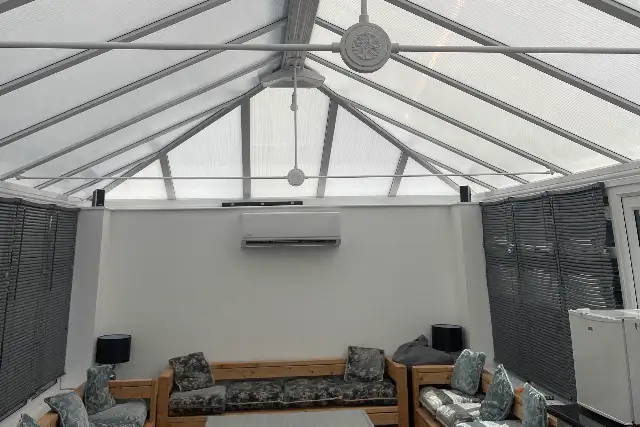
In most conservatories the practical puzzle is where to put the indoor unit. We generally avoid fixing to uPVC or aluminium frames, as they aren't designed to carry the weight or the vibration. We look for solid structure instead.
Which indoor unit suits my conservatory?
It comes down to which solid walls you have and where the air needs to go.
High wall unit on the house wall
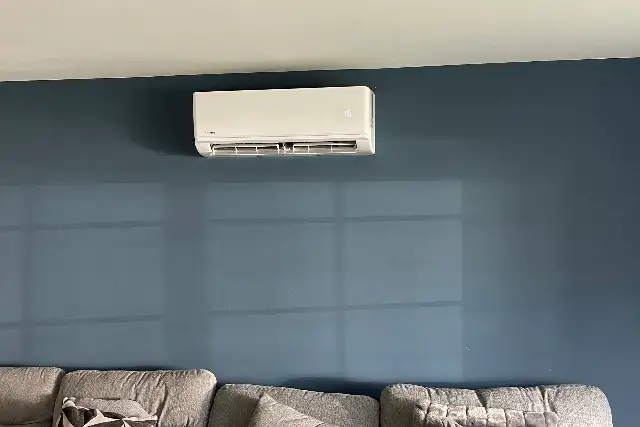
If the conservatory joins a brick or block house wall, a slim high wall unit there is usually the neatest answer. It sends air down the length of the room and keeps the floor clear.
Floor-standing unit on a dwarf wall
Where the only solid structure is a low dwarf wall, a floor-standing unit can sit against it and blow air up across the glazing, which is where most heat comes in and goes out.
Console units for low, compact spaces
Console units are small, low cabinets that can push air out of both top and bottom outlets. That's handy for heating, because warm air starts at floor level where you feel it most.
What affects the cost of conservatory air conditioning?
Every conservatory is different, so we don't publish set prices. The cost mainly depends on the capacity you need, the type of indoor unit and how straightforward the installation is. Get in touch to book a free site survey and we'll give you an accurate written quote with no obligation.
Running costs come down to how often you use the system, your electricity tariff and how well the room holds heat. Set to a sensible temperature, an inverter unit with good SEER and SCOP ratings is usually far cheaper to heat with than portable electric heaters. It's one reason conservatories are such a common part of our domestic air conditioning work.
Required capacity
Bigger, sunnier or more exposed conservatories need a higher-output unit, which affects the equipment cost.
Indoor unit style
High wall units are usually the cheapest option. Floor-standing and console units can cost more but are sometimes the only practical choice.
Pipe and cable routes
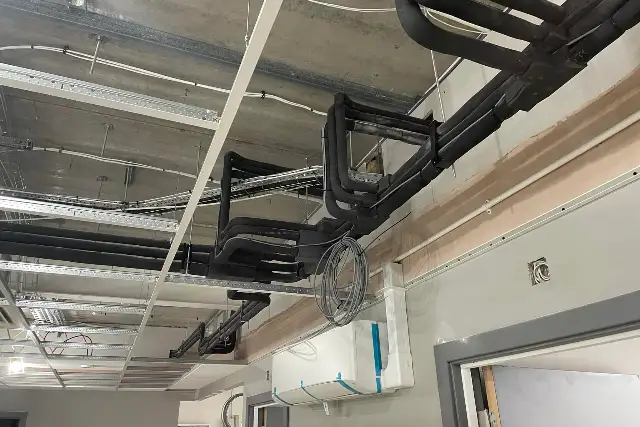
Longer routes, or pipework that has to go through thick walls or around obstacles, add time and materials.
Outdoor unit mounting
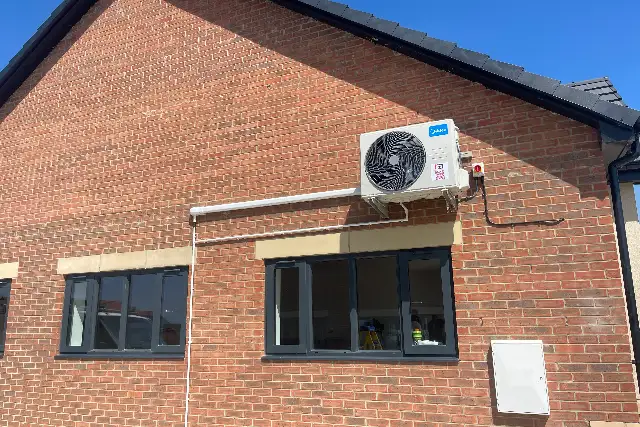
A wall bracket, ground stand or anti-vibration mounts, plus any coastal protection, all affect the total.
Electrical supply
Most systems need a dedicated circuit from the consumer unit, and how much work that involves varies from house to house.
Should you replace the roof or install air conditioning?
Some homeowners weigh up an insulated or solid replacement roof against air conditioning. The two aren't really alternatives, as they fix different parts of the problem. A new roof cuts solar gain and heat loss, so any heating or cooling has less work to do. Air conditioning actively controls temperature and humidity, whatever the roof is made of.
If a new roof is already planned, do that first and size the air conditioning afterwards, since the room will usually need a smaller unit. If the roof is staying, we simply size the system to suit it. At Teesside Air Conditioning we'll give you honest advice either way, and we'll tell you if a roof upgrade would make more difference to your room than a new unit.
Planning, building regulations and the outdoor unit
Many domestic air conditioning installations can go ahead under permitted development. The conditions are specific, though, and depend on the property, where the outdoor unit goes and the rules at the time. Listed buildings, flats and homes in conservation areas (parts of Yarm and Stokesley, for example) need extra care. If there's any doubt, check with your local planning authority before work starts.
Conservatories can also raise building regulations questions. Many are only exempt while they stay thermally separated from the house by external-quality doors and have no fixed heating linked to the house system. Adding fixed heating could change that, so it's worth confirming with your local building control team. We'll flag anything we think needs checking on jobs across Teesside and the surrounding areas, but the final decision rests with the authority.
Positioning the outdoor unit near the coast
In seaside spots such as Redcar, Saltburn and Hartlepool, salty air can corrode the outdoor unit's coil and casing over time. Where we can, we keep it out of direct sea-facing exposure, and coastal-grade or protective coatings are worth considering. Wherever you live, we pick a position with good airflow, a solid fixing, room for servicing and some thought for the neighbours' windows.